Meet Ray & Karen
A Husband & Wife Team Dedicated to Preserving Family Stories

Where It All Began
Every family has a beginning.
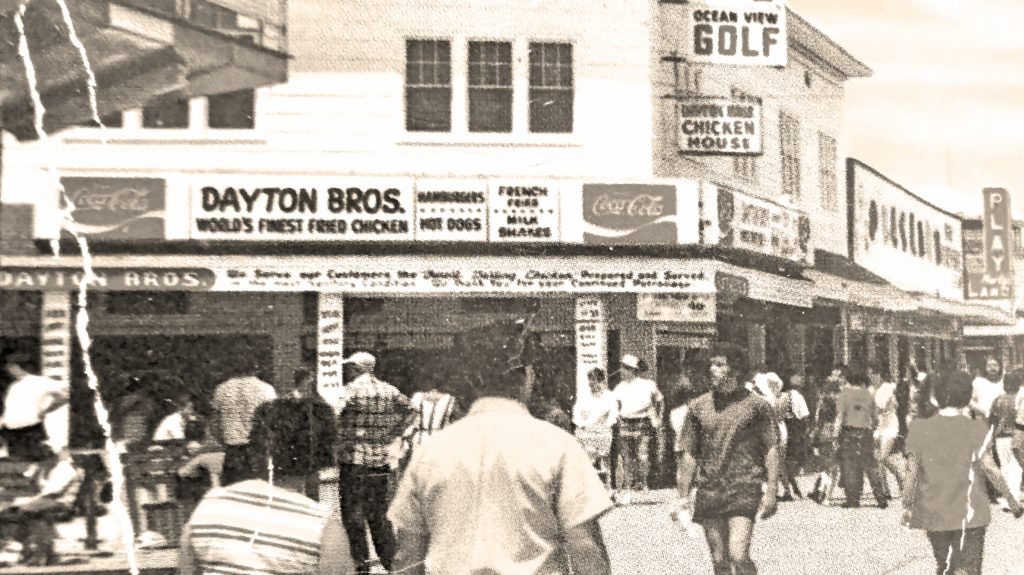
Ours began on the Ocean City Boardwalk.
Our story began long before photography.
Long before Raymond James Photography, there was Dayton Bros., founded on the Ocean City, Maryland Boardwalk by Raymond’s grandfather, Ray Dayton, and his brother, Roy Dayton.
Their business became part of the fabric of Ocean City, and the values they built it upon—hard work, honesty, and treating people with respect—were passed down through the generations to Raymond’s parents, James and Marion Dayton, and eventually to us.
Looking back, we realize Raymond James Photography wasn’t built when we opened our studio. It was built generations earlier through the values our family lived every day.
Two Hours on the Boardwalk
Karen and I were both working in the family business at Dayton Bros. In those days, seventeen-hour workdays were simply part of life on the boardwalk.
Then one Christmas, my mother and Karen gave me my first camera.
I had no idea where that gift would lead. During my two-hour breaks from Dayton Bros., I began taking the camera with me and photographing some of the waitresses who worked with us. Those two hours gave me a change of pace from the long days at the family business—and something new began to happen. I was falling in love with photography.
Before long, even those two-hour breaks weren’t enough. We began meeting on the beach for portraits at sunrise, squeezing photography into the few hours that existed before another long day on the boardwalk began.
And then there was Paul.
Paul and his dog were regulars at Dayton Bros., stopping in for lunch almost every day. Paul happened to be a professional portrait photographer who specialized in family beach portraits. During slower moments, we would sit and talk about photography.
Eventually, Paul invited me to attend a Maryland Professional Photographers meeting in Annapolis. One meeting became two, and two became many. Before long, I began entering the association’s monthly print competitions.
And wouldn’t you know it—the photograph that earned my first Best in Show was a portrait of one of the very waitresses I had photographed during those two-hour breaks on the boardwalk.
What had begun with a Christmas gift and a little time away from work was becoming something neither Karen nor I could have imagined.
Choosing Family
Karen and I had always expected Dayton Bros. would be part of our future. There was an understanding in the family that once the business was paid for, it would eventually become ours.
But somewhere along the way, our priorities changed.
We had five children—and that happened rather quickly when you have two at a time. The Ocean City Boardwalk had always been a wonderful place for children. Our kids could run around, and people looked out for one another. At Marty’s Playland, Sam and Bernice always kept an eye on them. It felt like a community.
Then the boardwalk began to change. It wasn’t the same family environment we had known, and Karen and I found ourselves watching the children differently and worrying about things we never had before.
We finally made a decision that changed the direction of our lives. We told Mom and Dad that as much as Dayton Bros. meant to our family, we didn’t want that life for our children.
Not long afterward, my parents received an offer to sell the business. They accepted it—and instead of simply closing one chapter of our family’s story, they helped Karen and me begin another.
They helped us build a 2,500-square-foot photography studio.
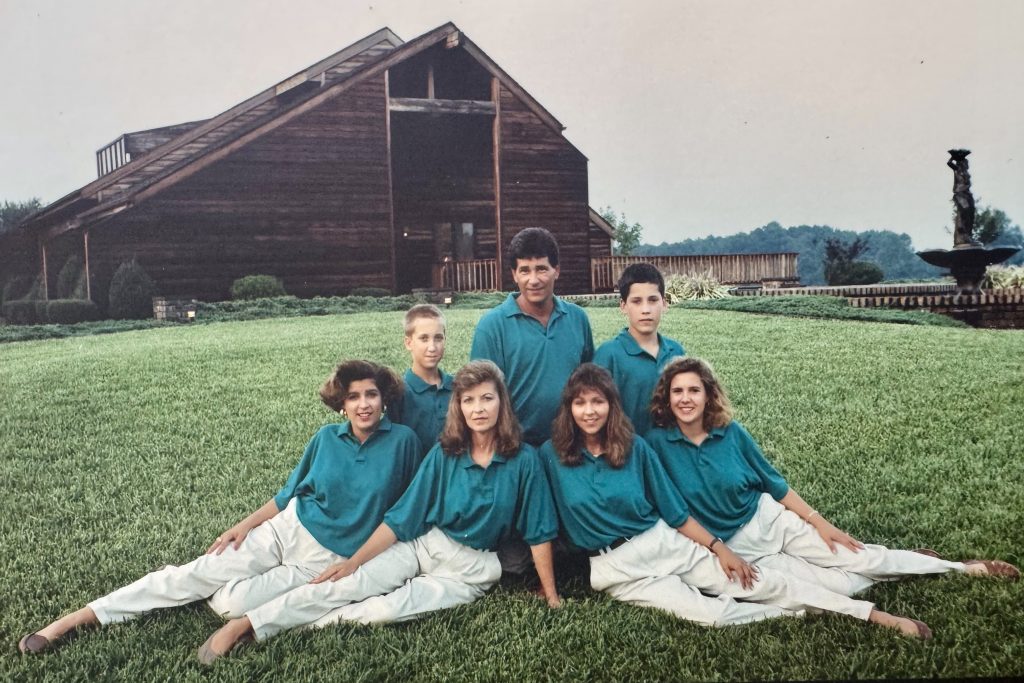
Our family, one year after Dayton Bros. was sold,
with our new photography studio in the background.
Building More Than a Studio
When Mom and Dad helped us begin our next chapter, Karen and I didn’t simply move into a photography studio.
We built one.
We started with blueprints for a modern building along Coastal Highway, then spent days redesigning the interior around the way we wanted to work—and the experience we wanted our clients to have.
There would be a camera room for creating the portraits, a production area where we could print them ourselves, a beautiful reception room with a soaring 21-foot ceiling, and a projection room designed entirely around presenting finished portrait art.
We weren’t just designing a place to take photographs. We were designing the entire portrait experience.
Then came the job of actually building it.
With the help of family and a neighboring carpenter, the walls went up, the brick fireplace began taking shape, and a crane set a massive 24-foot red-oak beam high above the reception room.
Piece by piece, our dream was becoming real.
Then Karen and I left for Atlantic City to attend the Professional Photographers of America national convention.
And that’s when the phone rang.
The call was about the studio.
A powerful nighttime thunderstorm had struck the unfinished studio. Wind had moved that enormous beam toward the partially completed fireplace, and lightning had traveled through the exposed framing, leaving burn marks around the nail heads.
When we returned home, Karen and I walked through the building, looked at the damage, and then at each other.
It could have been so much worse.
So we repaired the damage and kept building.
What eventually became RJ Studios was built with the help of family, friends, our own hands—and more than a few unexpected adventures along the way.
Just like the life Karen and I were building together, we built it one piece at a time.
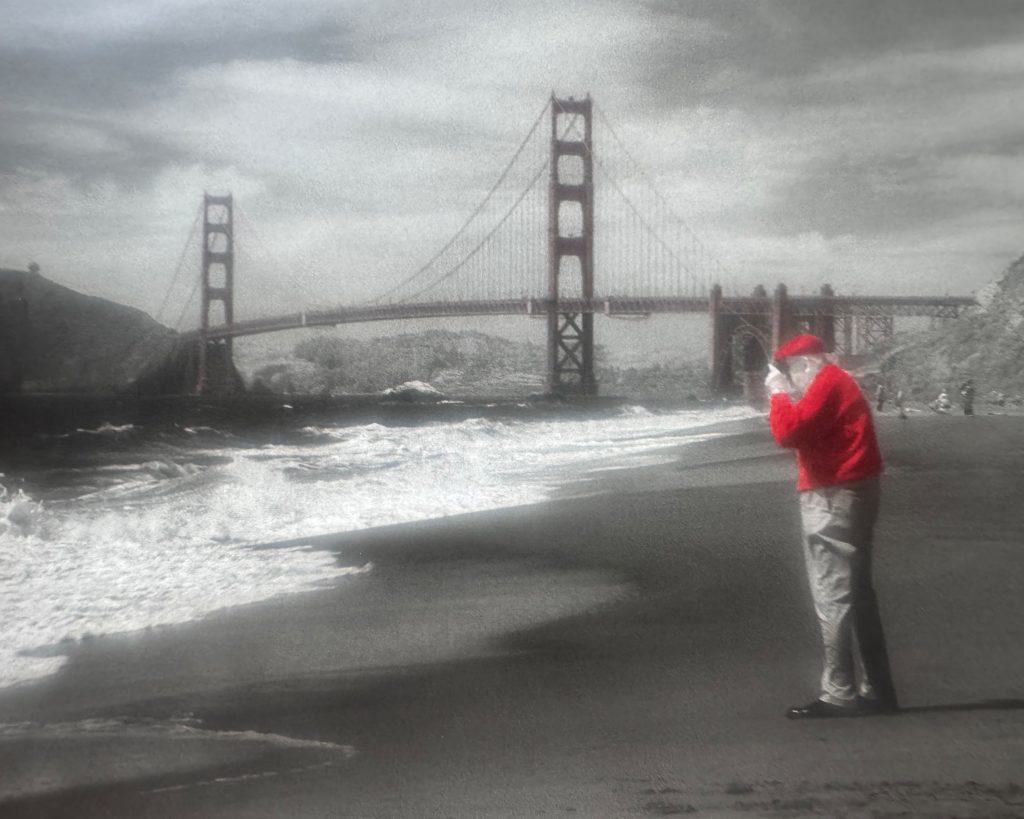
“Big Daddy” Don Blair — hand tinted by Karen Dayton
Photo By: Gary Fagan
When a Legend Becomes a Friend
One of the people who had the greatest influence on my photography was “Big Daddy” Don Blair, a legend among portrait photographers around the world.
I first saw Don at a photography convention where he was the featured speaker. His mastery of lighting and posing—especially the way he posed hands—was unlike anything I had experienced.
I was captivated.
Karen and I began attending more of his seminars. Eventually, attending became helping, helping became traveling, and somewhere along the way, Don became our friend.
We traveled with him helping present his educational programs. I assisted with setup and lighting while Karen managed what Don affectionately called his “country store,” where his educational materials were offered to photographers attending the programs.
Once, after helping with a seminar in Miami, we packed all of Don’s equipment and drove approximately seventeen hours to Philadelphia to set everything up again for another program the very next day.
We couldn’t get enough. We wanted to learn everything we could.
Don helped me understand lighting, posing and portraiture at an entirely different level. Much of what I learned from him became part of the photographer I would become.
But some of the most important lessons Don taught Karen and me had nothing to do with photography.
He taught us how to treat people.
Despite the respect he had earned throughout the profession, we remember his kindness, his generosity and the way he treated everyone around him.
Those values felt familiar. They were the same lessons about hard work, respect and treating people well that Karen and I had grown up with long before photography entered our lives.
Don Blair began as someone I watched from an audience in awe.
He became our teacher.
Our mentor.
And eventually…
Our friend.
All these years later, I remember the lessons.
But even more, I remember the man.
Go Where the People Are
We had a beautiful new portrait studio. We had spent years learning our craft. We had the cameras, the lighting, the equipment—and more enthusiasm than we knew what to do with.
There was just one problem.
Neither Karen nor I knew how to market a photography studio.
Everything I knew about business had come from growing up at Dayton Bros. You opened your doors where the people were. And on the Ocean City Boardwalk, there were always people.
So we went back to what I knew.
We began looking for a location in Rehoboth Beach with the kind of foot traffic I understood—families, vacationers and locals walking past every day.
We found it on Penny Lane.
To make it happen, we borrowed against the studio and created something that was still fairly unusual for a portrait photographer at the time.
A portrait gallery.
And just as we had done with the studio, Karen and I designed and built much of it ourselves.
This wasn’t going to look like a camera store or a place where someone simply came to have a photograph taken. We wanted people walking through Penny Lane to step inside and experience finished portraiture as artwork.
The walls became our advertising.
Families could see family portraits. Parents of high school seniors could imagine what we might create for their son or daughter. Visitors who had never heard of RJ Studios could walk through the door and discover us simply because something in the window caught their attention.
Without realizing it, we had taken something I learned as a boy on the Ocean City Boardwalk and carried it into an entirely different business.
Go where the people are.
It worked.
The gallery gave us visibility. It introduced our photography to people who might never have found the studio. And little by little, we began learning the part of photography that neither a camera nor a seminar could teach us.
How to build a business around the work we loved.
Give Them a Reason to Come Inside
Penny Lane gave us the location. Now we had to turn an ordinary space into a Portrait Gallery.
The downstairs had once been a pizza shop, and there wasn’t much about it that said portrait art. So Karen and I started over.
We rebuilt the interior around the artwork. Along the walls we created individual alcoves large enough to showcase 30×40 portraits, each with its own carefully controlled lighting. We added surround sound, a spiral staircase and an open balcony above. Karen sponge-painted the gallery herself, choosing warm colors and textures that complemented the portraits.
When we finished, we thought we had created exactly what we needed.
We opened the doors.
And waited.
The people didn’t come.
At least, not the way we expected.
So we improvised.
One evening we opened the double French doors onto Penny Lane and moved Karen and her easel as far outside as we dared.
Karen began demonstrating the oil glazing she used on our finished portraits.
She wasn’t particularly comfortable with all the attention.
But people stopped.
Soon they were gathering around her, watching as she worked and asking questions.
“She’s not really painting that portrait with oils, is she?”
They became curious.
And then they started walking through those French doors.
Before long, the gallery was doing exactly what we had hoped. We were photographing family beach sessions three or four evenings a week. Local high school juniors came to us during the summer so they could begin senior year with their portraits already finished.
Then we discovered something else.
Vacationing seniors wanted portraits too. They could return home from the beach with senior portraits unlike anything their friends had.
The gallery that had frightened us during those quiet first days became a successful part of our business for nearly ten years.
And once again, Karen and I had learned something we hadn’t expected.
We had gone to Penny Lane because I believed the answer was simple:
Go where the people are.
It turned out that was only half the lesson.
Once you’re there…
give them a reason to come inside.
The Years We Lost
The Portrait Gallery had been successful for nearly ten years.
Then the recession came.
Karen and I had borrowed against the studio to build the Gallery. We were carrying the Gallery’s rent and the studio mortgage, and by the time we fully understood how much trouble we were in, we had waited too long.
I’m not particularly proud of how we handled what came next.
We retreated.
The Gallery closed. We lost the studio. And after spending so much of our lives building something we loved, photography almost disappeared from our lives.
Almost.
There were still portraits for our own family—a senior portrait, a graduation—and occasionally a past client would call wanting another family portrait at the beach.
Whenever someone needed us, we picked up the camera.
But somewhere along the way, we found a word that made everything else easier to explain.
We were retired.
That’s what we told ourselves.
We had spent decades working, raised five children, built a studio and created a Portrait Gallery. Maybe that chapter of our lives was simply over.
So the years passed.
One became five.
Five became ten.
Eventually, nearly fifteen years had gone by.
Except there was one little problem with our retirement.
Every once in a while, somebody still needed a photographer.
And whenever that happened, something familiar returned.
It took us a long time to understand what that meant.
We had lost the Gallery.
We had lost the studio.
We had lost the business we had built.
But we hadn’t lost what we knew.
The years of learning were still there.
Karen was still an artist.
I was still a photographer.
And we still knew how to do all of it together.
Eventually, after nearly fifteen years of telling ourselves that part of our lives was over, Karen and I began looking at each other—and at everything we still knew how to do—a little differently.
Maybe we weren’t finished after all.
Maybe we were never really retired.
What We Never Lost
For a long time, Karen and I believed our years in professional photography were behind us.
We told ourselves we were retired.
But eventually, life began asking different questions, and we started talking about photography again.
The studio was gone. The Portrait Gallery was gone. The business we had once built was gone.
But the things that had made all of it possible were still here.
I still knew how to create a portrait.
Karen was still an artist.
We still understood lighting, posing and composition. We still knew how to work with families, make people comfortable in front of a camera and turn a portrait into something they could live with for generations.
And after all those years…
we still knew how to do it together.
The world had changed while we were away. Websites had replaced storefront windows.
Google and social media had changed how people found photographers.
We had a lot to learn.
But we already knew the part that mattered most.
We knew how to create beautiful portraiture.
So after nearly fifteen years of telling ourselves we were retired, we decided to begin again.
Not by trying to recreate RJ Studios or become the photographers we were thirty years ago.
But by bringing everything those years taught us into something new.
Raymond James Photography.
There really wasn’t anything stopping us.
We simply had to begin.
Why We Still Do This
For all the things that have changed over the years, one thing hasn’t.
Families still need photographs.
Not simply pictures of what everyone looked like, but portraits that remind them who they were together.
We know that because we have watched our own family grow.
Children become adults. Parents become grandparents. Families change in ways we never quite expect, and usually much faster than we think they will.
That is why we came back to photography.
Not because we wanted to rebuild what we once had.
And not because we were trying to prove that we could still do it.
We came back because the work still matters.
After all these years, Karen and I still believe there is something extraordinary about bringing a family together, slowing life down for just a little while, and creating something they will carry with them long after that day is over.
We know how to light a portrait.
We know how to pose a family.
We know how to make people comfortable in front of a camera.
But experience has taught us something even more important.
The photograph is only the beginning.
What matters is what that photograph becomes twenty or thirty years from now.
The portrait hanging in your home today may someday become the photograph your children point to when they tell their children about you.
That is the work Karen and I still want to do.
And perhaps, after everything you’ve just read, you understand why.
Every family has a story.
We would be honored to help you preserve yours.